The Investor Who Wins in the GTA Spring 2026 Market Is Not Who You Think
By YorkNine Journal ·
Landlords are bleeding. Flippers are sitting on losses. But one kind of GTA investor is quietly building wealth in spring 2026. Here is exactly who that is and how they are doing it.
The story of real estate investing in the GTA has changed completely since 2022. The investor who bought a downtown Toronto condo to rent out is now losing $800 a month after carrying costs. The investor who flipped in Mississauga is sitting on a property worth $90,000 less than the renovation budget. And yet, across Hamilton, Barrie, and the outer GTA, a quieter kind of investor is buying carefully and building positions that will look very smart in five years.
Spring 2026 rewards precision over ambition. Here is the playbook.
The Landlord Crisis: Understanding the Context
A Financial Post investigation published this week laid bare what GTA real estate insiders have known for months: the buy-and-hold landlord who purchased between 2020 and 2022 is in genuine financial distress. These investors bought at peak prices on low-rate mortgages, often at 1.99 to 2.49 percent. Their renewals are now coming due at 4.1 to 4.25 percent. A $700,000 mortgage renewing from 2.25 percent to 4.1 percent adds $1,230 per month in carrying costs.
Meanwhile, rents have softened. The national average rent declined for the fifth consecutive month in March 2026, according to Rentals.ca data. In Toronto proper, one-bedroom rents average $2,100, down from $2,350 at the 2023 peak. Two-bedroom units average $2,850, down from $3,200. The gap between rental income and carrying costs has become unsustainable for many investors who stretched to buy at peak prices.
This creates an important market dynamic: these distressed landlords are selling. Their listings are entering an already-supplied condo market and putting additional downward pressure on prices. For buyers looking to purchase a primary residence, this is opportunity. For investors still holding, it is a cautionary lesson about leverage.
Where the Smart Money Is Going
Three investment theses are working in the GTA market of spring 2026.
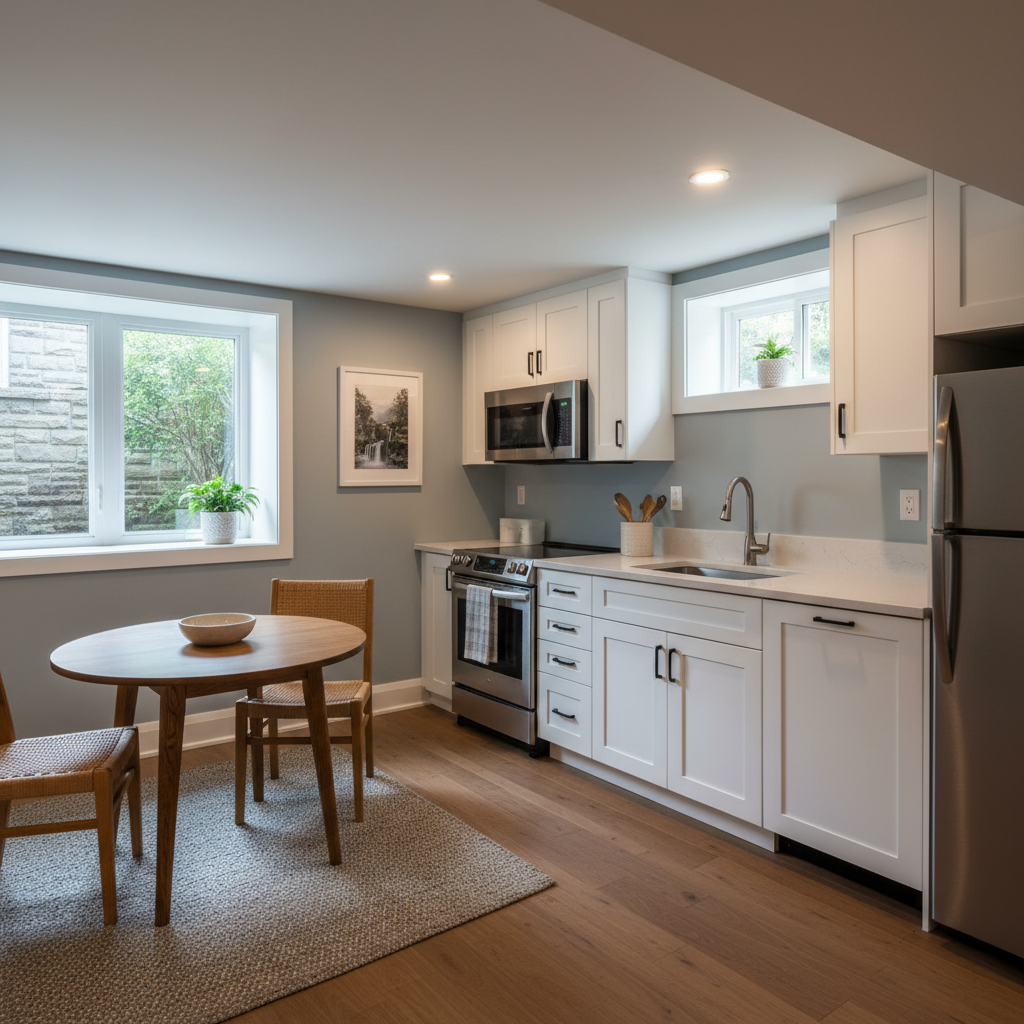
The first is Hamilton detached with legal basement suites. Hamilton's average detached home price remains below $750,000 in most neighbourhoods. A three-bedroom detached home with a legal two-bedroom basement suite can generate $1,850 to $2,100 per month in basement rental income while the owner occupies the upper unit. The gross rental yield on the basement alone, against a purchase price of $720,000, approaches 3.5 percent on the full property value. Add mortgage tax deductibility on the rental portion and the equation improves further. Hamilton's rental vacancy rate sits below 2 percent.
The second thesis is Barrie pre-construction at the right price point. Several Barrie developers are offering builder-direct inventory with delayed closing dates of 18 to 24 months and assignment provisions. For investors who can lock in at current pricing and wait for Barrie's population growth to absorb new supply, the appreciation potential is meaningful. The caveat is that rental income during the wait period does not exist for pre-construction. Investors pursuing this strategy need sufficient capital reserves to carry costs until delivery.
The third thesis is Durham Region small commercial-residential. Properties along Whitby and Ajax main streets that combine ground-floor commercial with one or two upper-floor residential units are trading at 5.5 to 6.5 percent cap rates, among the highest in the GTA corridor. These properties require more active management than pure residential, but the income diversification is valuable.
What to Avoid Right Now
Downtown Toronto condos purchased purely for rental income. The combination of softening rents, rising condo fees averaging $850 to $1,100 per month for units in buildings older than ten years, property tax increases, and the renewal rate shock make the math extremely difficult. Cap rates on Toronto condos purchased at current prices average 2.8 to 3.2 percent before vacancies and maintenance. This does not work as an investment thesis in 2026.
Cottage country speculation. Properties on secondary lakes in Muskoka, Haliburton, and the Kawartha region that were purchased as rental-investment properties during the 2020 to 2022 surge are now selling at 15 to 25 percent discounts to peak values. Rental income from short-term cottage rentals has softened as travel patterns normalized. Investors who were banking on Airbnb revenue to cover carrying costs are exiting.
Pre-construction in oversupplied GTA condo markets. With zero new condo launches in Q1 2026 and significant resale inventory already available at discounts to replacement cost, paying full developer price for a unit that will not deliver for three years is a fundamentally flawed strategy in the current environment.
The Five Year Horizon
Every experienced GTA investor understands that real estate returns are measured in decades, not quarters. The investors who purchased Hamilton detached homes in 2015 for $350,000 watched those properties reach $850,000 by 2022 and settle at $720,000 today. They are still sitting on more than 100 percent appreciation over ten years, plus a decade of rental income.
The investors who will look back on spring 2026 as their defining moment are buying Hamilton, Barrie, and select Durham Region properties now, at prices reflecting genuine correction, with fixed-rate mortgages that protect against rate uncertainty, and with a ten-year minimum holding horizon.
The GTA market is not broken. It is correcting. Corrections are when generational wealth is built by those patient enough to act with data rather than emotion.
Connect with a YorkNine investment specialist at yorknine.ca to build your acquisition strategy for spring 2026.
Related articles
- The GTA Investor Playbook for May 2026: Durham Region, Hamilton, and the Legal Basement Suite Strategy
- Oakville GO: what the station expansion actually includes
- A lower mortgage cost is only one part of affordability
- Mississauga’s incentive window is for development costs
- Milton’s high-density rebate: what is covered
- Joshua Creek Montage advertises 5% deposit — check the written terms