Ontario Real Estate Daily for May 25 2026: Lakeview Village, Aura, Affordability, and the New Math of Community Value
By Avi Samaroo and Quan Ve ·
A YorkNine Journal briefing on the rate hold, GTA market behaviour, affordability, new-home tax relief, condo strategy, Oakville transit value, Durham growth, and why Lakeview Village and Aura show the new beauty of planned community living.
Ontario real estate on May 25, 2026 is not asking buyers to be fearless. It is asking them to be prepared. The rate environment has steadied enough to create a planning window, but not enough to make every purchase easy. Prices still feel softer in many pockets, yet the best homes, best streets, and best community plans are already starting to separate from the average.
That is why today’s YorkNine Journal looks closely at the difference between buying a unit and buying a life. Aura at Lakeview Village, within Mississauga’s waterfront redevelopment story, is a useful example. The broader Lakeview Village plan is not just another building release. It is a 177-acre transformation of the former Lakeview Power Generating Station lands into a mixed-use waterfront community with housing, parks, trails, employment space, culture, and daily-life amenities.
The beauty of Lakeview Village is not only the lake. It is the possibility of a community where waterfront access, walkability, active transportation, restaurants, parks, trails, homes, and future gathering places work together. Aura belongs in that conversation because buyers are not only looking at price per square foot. They are asking whether a home can sit inside a place that will feel better with time.
YorkNine interpretation: the best Ontario real estate decisions in 2026 are not emotional or mechanical. They are layered. The math has to work, but the community has to make daily life better.
01 The Rate Hold Is a Planning Window, Not a Victory Lap
The Bank of Canada’s recent rate hold gives households something valuable: a little more structure for planning. It does not give permission to ignore risk. A stable policy rate can help buyers model payments, compare fixed and variable options, and talk to lenders with more confidence. But inflation, employment uncertainty, bond yields, and lender stress tests still matter.
For a buyer considering Aura, Lakeview Village, or any new-home release, the first question should not be whether the brochure feels exciting. It should be whether the payment survives normal life. Pre-approval is not the same as comfort. A family should be able to handle the deposit schedule, closing costs, possible adjustments, carrying costs, and a future mortgage without relying on perfect assumptions.
This is the right window to prepare, not to celebrate too early. Buyers who use the rate hold to build a better budget will have more leverage than buyers who treat it like a signal to stretch.

02 The GTA Is Tightening in Some Places While Prices Still Feel Soft
The GTA market is sending two messages at once. Many buyers still feel that prices are softer than the peak years. At the same time, certain properties are no longer sitting quietly. Good layouts, strong school pockets, walkable streets, transit access, and credible future community plans are attracting more focused attention.
That is the split market. Average inventory can feel negotiable while standout homes begin to move. For buyers, this means patience should not become passivity. For sellers, it means pricing still has to respect today’s market, but a well-positioned property can perform better than the headline numbers suggest.
Lakeview Village fits this tension. It is still a construction and absorption story, but the long-term waterfront plan gives buyers something more durable to evaluate than a single building. In a market where generic supply can compete heavily, community identity becomes a differentiator.

03 Affordability Is Improving, But It Is Not Solved
Affordability has improved in tone, not in total. Some prices are more approachable than they were during the most overheated period, and rate stability helps buyers model scenarios. But monthly ownership still has to include mortgage payments, property tax, maintenance, utilities, insurance, closing costs, transit costs, childcare realities, and lifestyle needs.
This is especially important for first-time buyers looking at compact townhomes or stacked formats in major master-planned communities. A lower entry price can be helpful, but it does not remove the need to understand the full cost of ownership. The right question is not simply “Can I buy it?” The right question is “Can I live well after buying it?”
Aura and Lakeview Village are compelling because the community promise is strong: water, parks, trails, retail, culture, and future public spaces. But YorkNine’s advice remains consistent. Let the beauty pull you in, then let the budget decide whether you stay.

04 New Homes Just Got a Major Tax Story — But Math Still Comes First
New-home buyers are watching tax policy closely because any relief can change the conversation around entry-level ownership. But tax savings, incentives, and launch pricing should never be treated as a substitute for underwriting. The numbers still need to work after deposits, upgrades, development charges, legal fees, occupancy costs where applicable, and final mortgage qualification.
For Lakeview Village, the official story is substantial: Mississauga identifies the site as a 177-acre mixed-use waterfront redevelopment with 16,000 residential units planned, including affordable or attainable housing, over 45 acres of parkland, six parks, trail connections, an iconic pier, and employment space in an Innovation Corridor. Those are meaningful city-building ingredients.
Aura should be evaluated inside that broader context. The project may offer an attractive path into the Lakeview Village lifestyle, but buyers should verify current pricing, availability, floor plans, maintenance structure, closing costs, and assignment rules directly before making decisions.

05 Supply Is Being Built Unevenly — Watch the Product Type
Ontario is building, but not every type of home is being built equally. Multi-unit supply can add density and choice, while low-rise family housing remains harder to reproduce in mature urban areas. This matters because a condo, a stacked townhome, a traditional townhome, and a detached home do not serve the same buyer or investor profile.
Lakeview Village is interesting because it blends the language of city-building with waterfront placemaking. The broader plan includes housing, employment, parks, trails, and cultural amenities rather than isolated towers. That does not mean every product will perform the same. It means buyers need to understand where their chosen home sits within the plan.
Product type is strategy. A compact townhome can be an entry point. A larger townhome can be an end-user family decision. A condo can be a lifestyle or investment play. The buyer has to know which story they are actually buying.

06 Southern Ontario Condos Need a Different Playbook
Southern Ontario condos need more careful analysis than they did during the easiest years of appreciation. Investors need to look beyond the launch package and test rent, vacancy, fees, competition, resale depth, assignment limits, financing, and closing risk. End users need to decide whether the building and neighbourhood will support their daily life, not just their first purchase.
At Lakeview Village, the waterfront and amenity story is stronger than a generic condo corridor. The official Lakeview materials emphasize parks, trails, culture, waterfront experiences, active transportation, restaurants, employment, and sustainability. That can help create real lifestyle value if the community matures as planned.
Still, every buyer should separate the community from the contract. Love the vision, then inspect the deal.

07 Oakville Shows Why Transit Value Is Really Amenity Value
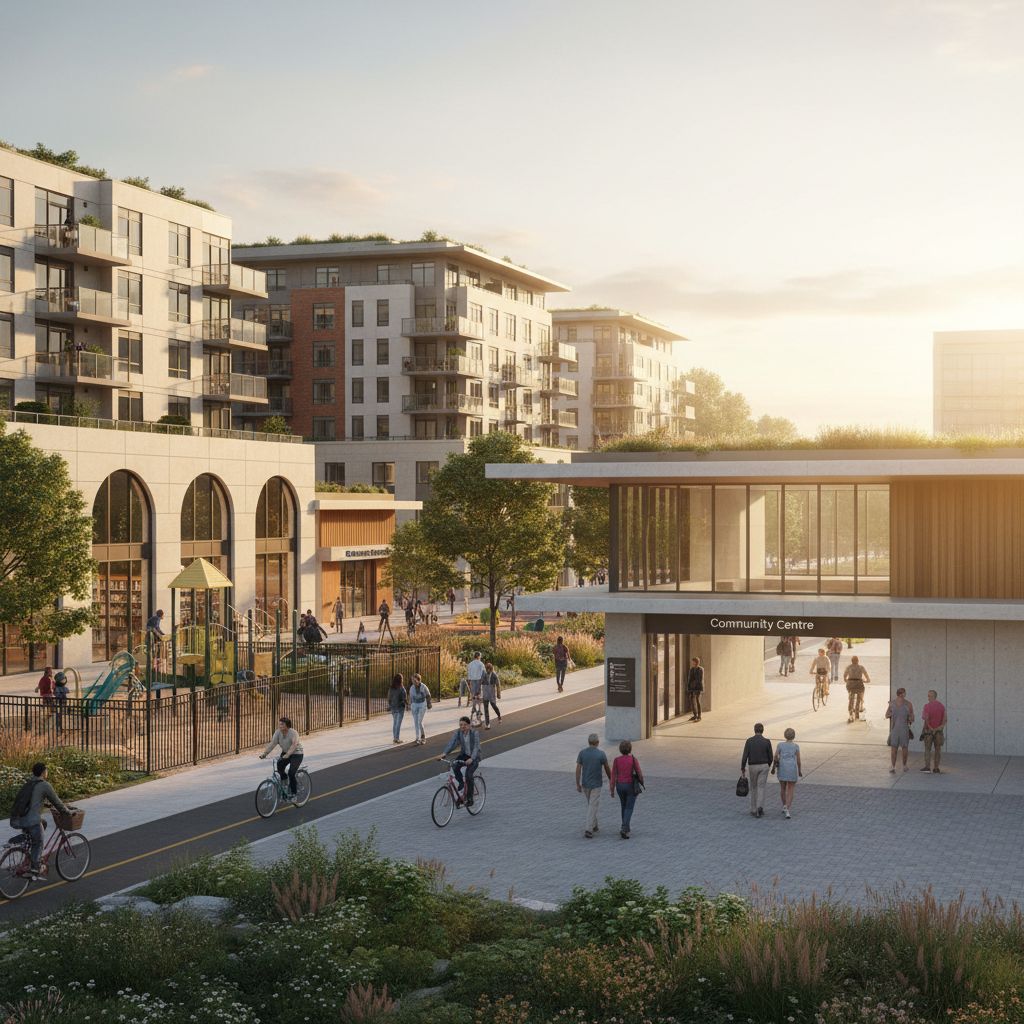
Transit is valuable, but transit alone is not enough. Oakville continues to show why the strongest communities are not built around a station in isolation. They are built around the daily ecosystem near that station: childcare, schools, libraries, trails, restaurants, community centres, groceries, parks, and safe public spaces.
This lesson applies directly to Lakeview Village. The value of a waterfront community will not come only from a view or a future transit connection. It will come from how many ordinary errands and routines become easier. Can someone walk to coffee? Can a parent reach childcare? Can seniors sit comfortably in public space? Can a family spend Saturday without driving across the region?
That is why community planning is not decorative. It is economic value translated into daily convenience.
08 Clarington, Courtice, and Bowmanville Are Moving From Promise to Construction
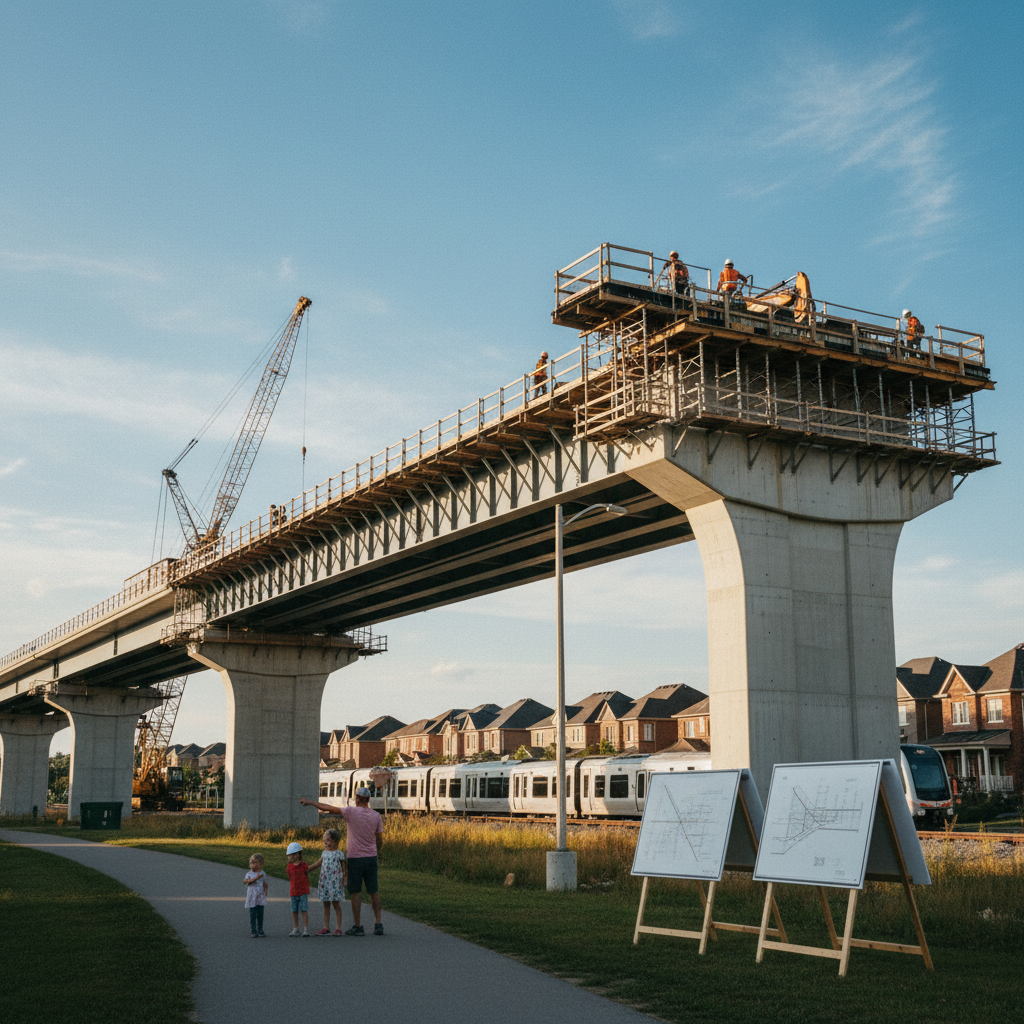
East of Toronto, communities such as Clarington, Courtice, and Bowmanville are entering a different phase of their growth story. Infrastructure promises matter most when they begin turning into visible work. Rail extensions, bridge work, station-area planning, roads, and new services can shift buyer confidence because they make future access easier to imagine.
The lesson for Lakeview Village is similar. Early construction can feel disruptive, but it is also how a paper plan becomes a real place. Buyers should understand the timeline honestly. A future community may require patience before it delivers its full lifestyle value.
For long-term buyers, that patience can be part of the opportunity. For short-term investors, it can be part of the risk. The same construction sign can mean two very different things depending on your timeline.
09 Follow the Schools, Child Care, and Community Gathering Places
The best real estate decisions are rarely about the home alone. They are about the life around the home. Schools, childcare, libraries, parks, restaurants, community centres, trails, public squares, and safe sidewalks are what turn a purchase into a routine people want to keep.
That is why Lakeview Village is worth watching. The beauty is not only in the waterfront renderings. It is in the idea of a complete community on a piece of land that used to separate people from the lake. If the parks, trails, pier, cultural spaces, restaurants, employment areas, and homes come together well, the value proposition becomes larger than a single address.
YorkNine’s recommendation is simple: follow the gathering places. Buyers should look for communities where people will naturally meet, walk, eat, learn, commute, rest, and return. Aura at Lakeview Village may attract attention because of pricing and product. The deeper reason to study it is the promise of daily life by the lake.

Final YorkNine view: In 2026, the winning buyer is not the fastest buyer. It is the clearest buyer. Know your payment, verify the incentives, understand the product type, study the construction timeline, and choose the community that makes daily life better.
Related articles
- Oakville GO: what the station expansion actually includes
- A lower mortgage cost is only one part of affordability
- Mississauga’s incentive window is for development costs
- Milton’s high-density rebate: what is covered
- Joshua Creek Montage advertises 5% deposit — check the written terms
- Greenwich’s advertised inclusions need a suite-specific check