Why Kitchener Waterloo Buyers Are Winning Spring 2026 While GTA Waits
By YorkNine Market Intelligence ·
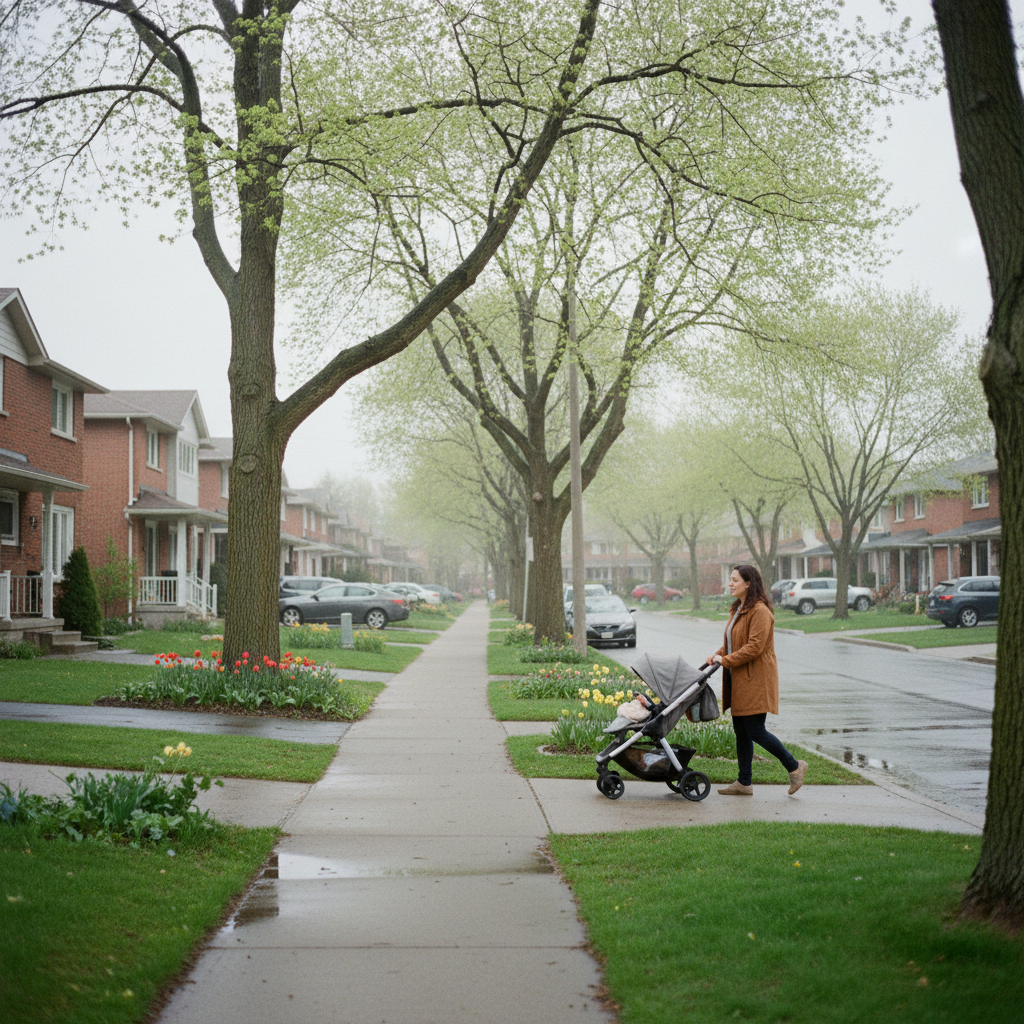
As the GTA market tightens with 16.7% fewer listings, Kitchener Waterloo is experiencing a remarkable moment of balance and opportunity. A woman standing at her kitchen window in downtown Kitchener gazes out at a row of Victorian homes. The neighborhood is quiet, the homes are priced 25% below their Toronto counterparts, and she has never had more negotiating power.
The sun rises over Kitchener Waterloo on a Friday morning, and for the first time in years, something unexpected is happening: buyers have options.
While the Greater Toronto Area has tightened into a seller's market, Kitchener Waterloo is experiencing a moment of balance that will not last. According to the latest market data from March 2026, the GTA saw new listings plummet 16.7 percent year over year, tightening inventory dramatically. Yet in the Waterloo Region, the landscape tells a different story. The average home price stands at $733,258, down 4.4 percent from last year, with 1,082 new listings added this month and 2.9 months of supply on the market. For buyers looking to claim real value before the spring rush, the window is closing.
The GTA Tightening: A Moment of Transition
The Toronto Regional Real Estate Board reported 5,039 home sales in March 2026, up just 1.7 percent year over year. While that sounds positive, the real story is in the supply side. New listings cratered to 14,442, a stunning 16.7 percent decline from March 2025. This means fewer homes to choose from, period.
The average selling price in the GTA held steady at $1,017,796, down 6.7 percent from March 2025. The MLS Home Price Index Composite benchmark fell 7.4 percent year over year. Buyers got a reprieve. They had negotiating power last month. But as inventory tightens week by week, that power is evaporating.

Kitchener Waterloo: The Balanced Market Thesis
Thirty kilometers west, Kitchener Waterloo is living the moment the GTA is losing. With 2.9 months of supply and prices still declining 4.4 percent year over year, the market sits in that rare equilibrium where a buyer can negotiate meaningfully.
The mathematics are undeniable. A home selling for $733,258 in the Waterloo Region would cost $1,017,796 in the GTA. That is a $284,538 gap. A buyer spending $600,000 in Kitchener gets a detached home with land, space, and modern systems. The same $600,000 in Toronto might be a detached property in an outer neighbourhood, or a renovated condo in a central area. The choice is clear.
Barrie and Simcoe, also experiencing tighter inventory but still reasonably priced, are seeing migration from the GTA. Hamilton, once written off, is now recognized as a serious rental market with long-term development potential. Even Durham Region is showing more balanced supply and demand. Kitchener Waterloo has not yet seen that in-migration surge. The listings are still available. The prices are still favourable.
The Mortgage Rate Backdrop: Why April Matters
On April 29, 2026, just five days from now, the Bank of Canada will announce its interest rate decision. The central bank has held its policy rate at 2.25 percent since October 2025. A five-year fixed insured rate sits at 3.99 percent. A five-year variable at 3.30 percent. For comparison, one year ago borrowers were paying 5 percent plus on five-year fixed terms.

A couple buying a $733,000 home in Kitchener at 3.99 percent fixed over 25 years carries a monthly payment of approximately $3,580. If rates drop to 3.49 percent, that falls to $3,413. Over five years, that is roughly $10,000 in savings. Buyers today face a genuine strategic decision: lock in now or wait for potential Bank of Canada cuts later in 2026.
The Spring Rush: When the Window Closes
Every year, April and May see a surge in home sales as the market awakens from winter. This year that surge is complicated by scarcity in the GTA. Fewer homes on the market means faster sales, higher competition, and a shift back toward seller power.
In Kitchener Waterloo, that dynamic is still unfolding at a gentler pace. A buyer shopping this week has genuine options in the sub-$700,000 range. A buyer shopping in June may not. A buyer who can move quickly and decisively has a real advantage while listing inventory is declining but has not yet evaporated.
The Opportunity for Ontario's Balanced Markets
This moment reveals something deeper about Ontario's real estate evolution. Work from home has enabled remote employment. GTA commutes have lost cachet for many families. Kitchener Waterloo offers not just affordability, but genuine growth. The region hosts Shopify, Google, and dozens of tech firms. Schools are strong. The downtown core is revitalizing.
The same case can be made for Hamilton, parts of Durham, and the outer reaches of York Region. These are not second-tier markets anymore. They are markets where a buyer with $600,000 can claim an asset with genuine room for appreciation in a community with real momentum.
Spring 2026 marks a genuine transition in Ontario real estate. The GTA is tightening into scarcity. Outlying regions are opening into opportunity. Mortgage rates have stabilized and may move lower. And buyers, for the first time in years, have time to think.
The window is open. It will not stay that way long.
Visit yorknine.ca for detailed market analysis, custom valuations, and strategic guidance for your Ontario real estate decision.
Related articles
- Oakville GO: what the station expansion actually includes
- A lower mortgage cost is only one part of affordability
- Mississauga’s incentive window is for development costs
- Milton’s high-density rebate: what is covered
- Joshua Creek Montage advertises 5% deposit — check the written terms
- Greenwich’s advertised inclusions need a suite-specific check