The GTA Income Property Playbook for Spring 2026: Where the Numbers Work and Where They Do Not
By YorkNine Journal ·
With Macklem warning of consecutive rate hikes and rental vacancy below 2 percent in Hamilton and Durham, the income property equation in the GTA has narrowed. Here is exactly where it still works, and how to stress-test every deal before you act.
The spreadsheet does not lie. He has been running the numbers for three months, a kitchen table in Hamilton, a laptop open to a CMHC rental data report, a cold cup of coffee at his elbow. He is 44 years old. He has a paid-off primary residence in Burlington, $340,000 in a TFSA, and a question that keeps him up at night: is this still the moment to buy an income property in the GTA, or has the window closed?
The answer, as of April 30 2026, is nuanced. The window has not closed. But it has narrowed. And the investors who understand exactly where it is open and exactly where it is not are the ones who will build wealth in this cycle while others wait for clarity that never comes.
The Hamilton Thesis: Why It Still Works in 2026
Hamilton is the most compelling income property market in the Golden Horseshoe right now, and the data is specific enough to act on. Rental vacancy in Hamilton sits below 2 percent. Average two-bedroom rent in the lower city ranges from $1,850 to $2,150 per month. Detached homes with legal basement suites in the east and north end are available between $650,000 and $760,000. The math on a $700,000 acquisition at 20 percent down and a 4.1 percent fixed rate mortgage produces a monthly carrying cost of approximately $3,350 all in. With a basement suite generating $1,900 and the main floor owner-occupied or rented at $2,400, the property either breaks even or generates modest positive cash flow from day one.
That is not a homerun. That is a foundation. In a market where most GTA income properties are deeply negative cash flow, a Hamilton detached that breaks even at acquisition and appreciates at even 3 percent annually over a 10-year hold generates meaningful wealth on a leveraged basis.
The Legal Basement Suite Equation Across the GTA
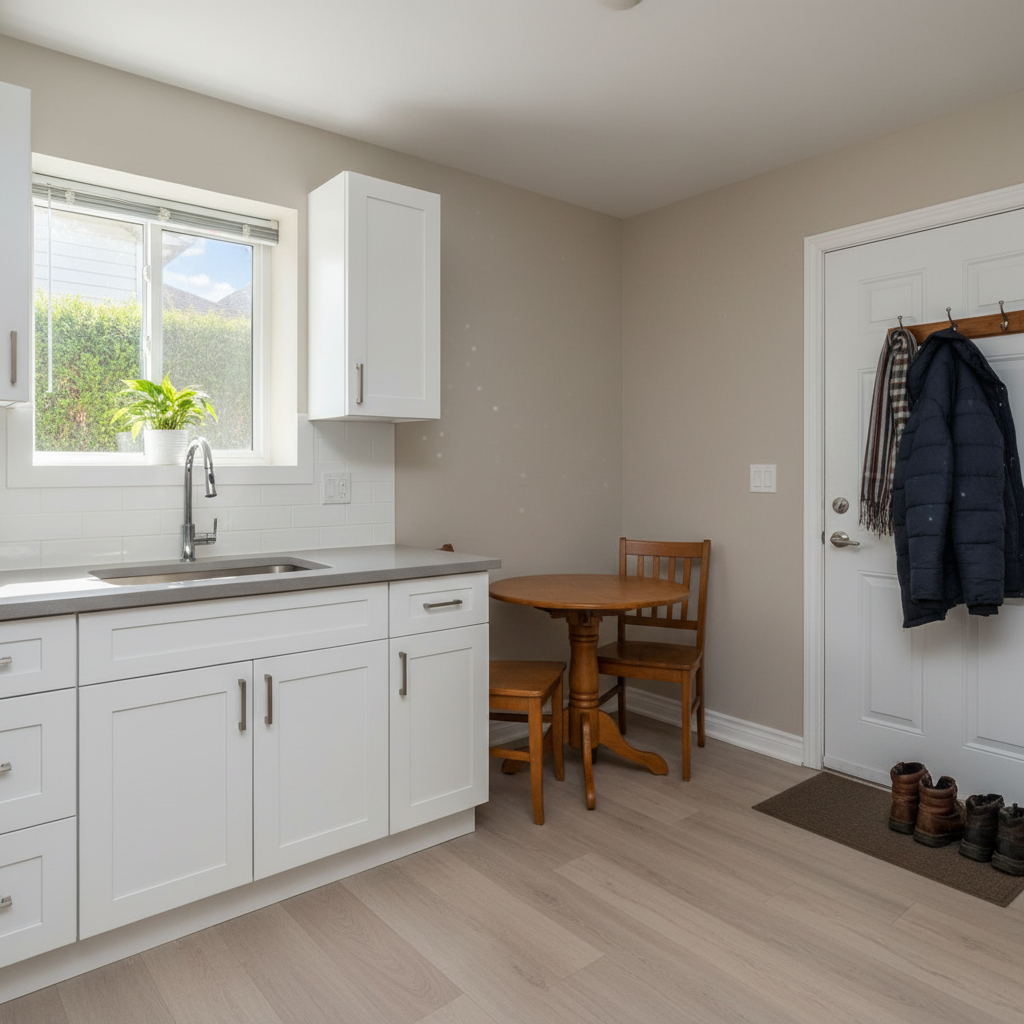
The single most important filter for GTA income property investors in 2026 is the presence of a legal basement suite with a separate entrance. This one feature changes the entire cash flow equation.
In Brampton, detached homes with legal suites are available between $880,000 and $980,000. A basement suite in Brampton rents for $1,700 to $2,000 per month. On a $950,000 acquisition at 20 percent down, the basement income reduces net carrying cost by 38 to 45 percent. At $980,000 with $196,000 down, your mortgage at 4.1 percent over 25 years produces a payment of approximately $4,100 per month. Add property tax, insurance, and maintenance and you are at approximately $4,800 per month. Subtract $1,850 in basement rent and your effective housing cost is $2,950 per month, well below what a comparable rental in Brampton would cost you.
In Ajax and Whitby, the same arithmetic plays out at a slightly lower entry price. Detached with legal suites between $820,000 and $900,000. Basement rents $1,650 to $1,900. Durham Region vacancy below 2.5 percent. The GO Transit corridor drives consistent rental demand from commuters who want space without Toronto prices.
In Hamilton, the equation is the strongest. As outlined above, the combination of lower entry price, strong rental demand, and improving GO rail service creates the most defensible income property thesis in the GTA catchment area.
The Rate Risk Overlay: Planning for Consecutive Hikes
Bank of Canada Governor Macklem's warning on Wednesday was not hypothetical. Consecutive rate hikes are a real scenario if Brent crude stays above US$100 through summer. Every investor model built today needs to be stress-tested against a 1.0 percent overnight rate increase by year end.
On a $700,000 Hamilton investment property with a variable rate at 3.35 percent, a 1.0 percent rate increase adds approximately $310 per month to the mortgage payment. On a $950,000 Brampton property at variable, the same increase adds approximately $420 per month. This does not break the Hamilton or Brampton thesis, but it does change the margin of safety.
The investor response to this risk is straightforward: fix the rate. At current 5-year fixed rates of 4.05 to 4.25 percent on investment properties, locking in removes the rate risk entirely for 5 years. The premium over variable is approximately 0.70 percent. On a $700,000 mortgage, that is approximately $290 per month. Given Macklem's explicit consecutive hike warning, that $290 per month is cheap insurance.
The Investor Checklist for Spring 2026
Before any income property acquisition this spring, a disciplined investor runs this checklist:
Cash flow at purchase: Does the property break even or better at current rates with stress-tested vacancy at 5 percent? If not, what is the maximum tolerable monthly shortfall and can you sustain it for 24 months?
Rate scenario: Does the property still work at a 1.0 percent rate increase? Build the model before you make the offer, not after.
Legal suite status: Is the basement suite permitted and inspected by the municipality? An illegal suite is an uninsurable suite. One tenant complaint ends the income.
Rental demand: What is the vacancy rate in this specific neighbourhood, not the broader city? A 1.8 percent citywide vacancy means nothing if the block you are buying on has three vacant suites.
Exit strategy: What does this property look like in 5 years if you need to sell? Is the buyer pool for a $760,000 Hamilton detached deep enough to ensure liquidity?
10-year hold scenario: Income property investing in the GTA is a 10-year discipline. Model it that way. The investor who panics at year three because of a rate hike and sells at a loss has not invested. They have speculated.
The Moment Is Specific
The Hamilton investor thesis works right now, in spring 2026, at current prices, with current rental demand, with a fixed rate mortgage and a legal suite. It does not work everywhere in the GTA and it does not work at every price point.
The man at the kitchen table in Burlington closed on a Hamilton east end detached with a legal suite last week. He fixed his rate. He tenant-qualified two applicants. The basement will be occupied May 15.
His spreadsheet does not lie. And right now, it is telling him he made the right call.

Visit yorknine.ca to explore income property opportunities across Hamilton, Brampton, Ajax, Whitby, and every GTA community where the numbers work.
Related articles
- Oakville GO: what the station expansion actually includes
- A lower mortgage cost is only one part of affordability
- Mississauga’s incentive window is for development costs
- Milton’s high-density rebate: what is covered
- Joshua Creek Montage advertises 5% deposit — check the written terms
- Greenwich’s advertised inclusions need a suite-specific check