Toronto’s 2026 Reset: Why the Next Great Lifestyle Move Is Being Built Around Transit, Choice, and Patience
By YorkNine Real Estate ·
Today’s GTA market is not a crash story — it is a patience story. Sales are improving, prices remain negotiable, and Toronto’s next lifestyle communities are being built around transit, waterfront access, and complete-neighbourhood living.
Toronto’s 2026 Reset: Why the Next Great Lifestyle Move Is Being Built Around Transit, Choice, and Patience
Published May 27, 2026 by YorkNine Real Estate
Toronto real estate in 2026 feels different because it is different.
The market is no longer running on panic, bidding-war adrenaline, or the fear that tomorrow will be dramatically more expensive than today. Instead, the most interesting opportunity in the GTA is quieter: buyers have more room to think, developers are being forced to sharpen their value proposition, and the best neighbourhood stories are increasingly tied to transit, lifestyle infrastructure, and long-term livability.
That is good news for serious buyers.
It means the conversation can finally move beyond “what can I win?” and back toward “what will actually improve my life?”

The market: more activity, but still negotiating power
TRREB’s latest April 2026 Market Watch shows the GTA is firming up after a slower stretch. GTA REALTORS® reported 5,946 sales in April 2026, up 7% year-over-year, while new listings fell 9.3% to 17,097.
That combination matters. Sales rising while new listings fall suggests certain pockets are starting to tighten again — not everywhere, not all at once, but enough to change the tone of the spring market.
Yet buyers are not powerless. TRREB also reported the average GTA selling price at $1,051,969, down 4.9% year-over-year, while the MLS® HPI Composite benchmark was down 6.6% compared with April 2025.
In plain language: activity is improving, but pricing has not fully snapped back. That is the window.
For lifestyle buyers, this is a rare combination: more confidence than last year, but still enough choice to negotiate on condition, timing, inclusions, and location quality.

The national backdrop: Ontario is still carrying the weight
CMHC’s 2026 Housing Market Outlook paints a careful picture. Nationally, housing demand is expected to gain momentum, but sales remain below historical averages and new construction is expected to decline through 2028 as developers deal with high costs, weaker demand, and unsold inventory.
The most important line for GTA buyers: CMHC expects Ontario and British Columbia to remain weaker than their 10-year averages, with Ontario the only region expected to see price declines in 2026 before recovery begins later.
CREA’s April 2026 forecast adds another layer. CREA projects 474,972 residential sales nationally in 2026, only 1% above 2025, and forecasts the national average price rising 1.5% to $688,955. Ontario is expected to show virtually no price growth.
That tells us the next phase of the market will not reward lazy buying. It will reward disciplined buying.
The winners will be people who understand the difference between a discount and value.
The project story: infrastructure is shaping the next lifestyle map
The strongest lifestyle story in Toronto right now is not just a condo tower or a sales centre. It is infrastructure.
Waterfront Toronto’s March 2026 announcement on Waterfront East Transit is one of the clearest examples. The project is designed to unlock Toronto’s eastern waterfront and support approximately 75,000 homes, serve more than 150,000 people, accommodate over 50,000 daily riders, create more than 100,000 jobs, and generate more than $13.2 billion in economic value.
That is not a small neighbourhood improvement. That is a city-building thesis.
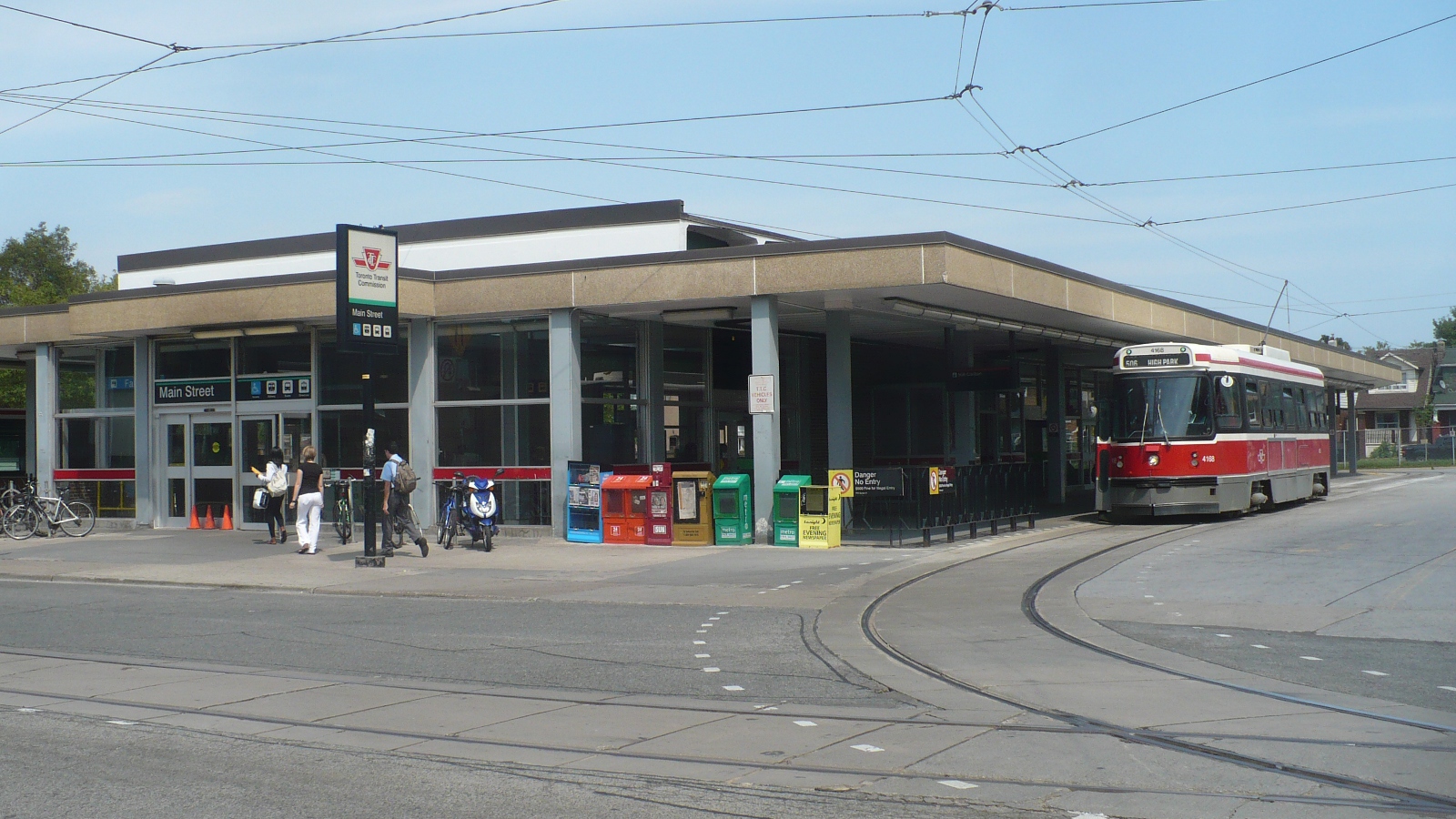
When transit, parks, bridges, trails, streetcars, and housing are planned together, the real estate story changes. Buyers are no longer only purchasing square footage. They are buying into a future daily rhythm: a shorter commute, a waterfront walk, more public space, more cafés, better cycling access, and a more complete neighbourhood around them.
That is where long-term lifestyle value lives.
.jpg)
Pre-construction: sharper, more selective, more lifestyle-driven
Pre-construction in 2026 is not dead. It is being repriced emotionally.
The old pitch was simple: buy early, wait, and assume appreciation. That is not enough anymore. Buyers want a reason.
Projects need to answer:
- Is the location actually improving?
- Is transit real or just a render?
- Is the builder credible?
- Is the floor plan livable?
- Does the neighbourhood support daily life?
- Is the pricing justified against resale alternatives?
Tridel’s current Toronto pre-construction page is a useful example of how major developers are positioning product around real neighbourhoods and lifestyle use cases, including communities such as 6080 Yonge in North York, Queen Church in Downtown Toronto, and MRKT near Dundas & Spadina.
But for YorkNine, the visual standard for editorial posts is real photography first: real streets, real skyline, real cafés, real transit patterns, real neighbourhood energy — not CGI.

Lifestyle lens: the best purchase is the one that makes your week easier
A beautiful unit is not enough if your week becomes harder.
The best GTA purchase in 2026 may be the one that gives you back time:
- a real transit option instead of a daily drive,
- grocery and coffee within a short walk,
- a park or waterfront route that becomes part of your routine,
- a floor plan that supports remote work without sacrificing the bedroom,
- a building that feels calm, not crowded,
- a neighbourhood that has future investment already underway.
This is why lifestyle-led real estate matters. A home is not just an asset. It is the stage where your habits happen.
And in a market with more choice, buyers can finally ask better questions.

Neighbourhood character: the best streets still matter
The strongest real estate stories are not only told by towers. They are also told by blocks, porches, mature trees, sidewalks, schools, markets, and the feeling of a street at 8 a.m. on a weekday.
That is why neighbourhood photography matters in the YorkNine Journal. A serious buyer should see the difference between a skyline investment thesis, a transit-led development story, and the established residential fabric that gives a community its staying power.
In 2026, the most resilient properties are often attached to places people can understand quickly: streets with identity, homes with human scale, and daily-life amenities that do not depend on future promises.

YorkNine take: this is a “quality of decision” market
The next big move in Toronto real estate will not be loud. It will be precise.
Buyers who chase the lowest price without understanding the neighbourhood may still overpay. Buyers who chase a glossy project without reading the transit and absorption story may miss the risk. But buyers who combine market data, infrastructure, builder quality, lifestyle fit, and patience can make unusually strong decisions right now.
Today’s GTA market is giving serious buyers something they rarely get: time to think.
Use it.
.jpg)
What to watch next
- Inventory direction: If new listings continue to fall while sales rise, the best properties will tighten first.
- Waterfront infrastructure: Transit and enabling infrastructure will shape future value more than renderings alone.
- Pre-construction incentives: Watch for real incentives, not cosmetic ones.
- Neighbourhood livability: Complete communities will outperform isolated towers.
- Rate expectations: Buyer confidence can shift quickly when borrowing-cost expectations change.

Sources and photo credits
- TRREB Market Watch, April 2026: https://trreb.ca/market-data/market-watch/
- TRREB April 2026 full report: https://trreb.ca/wp-content/files/market-stats/market-watch/mw2604.pdf
- CMHC Housing Market Outlook 2026: https://www.cmhc-schl.gc.ca/professionals/housing-markets-data-and-research/market-reports/housing-market/housing-market-outlook
- CREA Quarterly Forecast, April 16, 2026: https://www.crea.ca/housing-market-stats/canadian-housing-market-stats/quarterly-forecasts/
- Waterfront Toronto, Waterfront East Transit announcement: https://www.waterfrontoronto.ca/news/more-than-transit-governments-commit-to-advance-transit-unlock-housing-jobs-and-a-connected-eastern-waterfront
- Tridel Toronto pre-construction communities: https://www.tridel.com/pre-construction-condos-toronto/
- Photo: Toronto skyline and waterfront, Wikimedia Commons: https://commons.wikimedia.org/wiki/File:Toronto_skyline_and_waterfront.jpg
- Photo: Skyline of Toronto viewed from Harbour, Wikimedia Commons: https://commons.wikimedia.org/wiki/File:Skyline_of_Toronto_viewed_from_Harbour.jpg
- Photo: Main Street TTC and streetcar, Wikimedia Commons: https://commons.wikimedia.org/wiki/File:Main_Street_TTC_and_streetcar.JPG
- Photo: Condo construction on Berkeley, Wikimedia Commons: https://commons.wikimedia.org/wiki/File:Condo_construction_on_the_east_side_of_Berkeley,_2023_01_14_(52626603237).jpg
- Photo: A street market on Yonge Street, Wikimedia Commons: https://commons.wikimedia.org/wiki/File:A_street_market_on_Yonge_Street.jpg
- Photo: The Annex Victorian homes, Wikimedia Commons: https://commons.wikimedia.org/wiki/File:The_Annex,_Toronto_-_Victorian_homes.jpg
- Photo: Forest Hill houses, Wikimedia Commons: https://commons.wikimedia.org/wiki/File:Houses_on_Warren_Road_in_Toronto%27s_Forest_Hill_neighbourhood.jpg
- Photo: Beaches Houses Toronto 2010, Wikimedia Commons: https://commons.wikimedia.org/wiki/File:Beaches_Houses_Toronto_2010_(1).jpg
- Photo: M City Condos Construction, Wikimedia Commons: https://commons.wikimedia.org/wiki/File:M_City_Condos_Construction_Sept_2021.jpg
This article is for general information only and is not financial, legal, mortgage, or investment advice. Project availability, pricing, incentives, and timelines should be independently verified before making a purchase decision.
Related articles
- GTA Market Update and Bank of Canada Interest Rate News for September 8 2026
- GTA Real Estate Market Update for September 7 2026
- Ontario Real Estate Market Update for September 6 2026
- YorkNine Journal Market Briefing September 5 2026
- YorkNine Journal Market Briefing for September 4 2026
- YorkNine Journal Market Update for September 3 2026