Ontario Real Estate Investor Briefing for May 13 2026: Rates, Pre Construction Math, Supply, and the GTA Opportunity Window
By Avi Samaroo and Quan Ve ·
A rich YorkNine briefing on Ontario real estate for May 13 2026, covering rates, TRREB data, affordability, new homes, supply, investor math, Kitchener Waterloo, and what buyers should do next.
At 9:12 on Wednesday night in Mississauga, the calculator was still open on the kitchen table. The dishwasher hummed in the background. A half finished mug of tea sat beside a mortgage renewal letter, a condo floor plan, and a notebook full of numbers that no longer behaved the way they did three years ago.
The couple at the table were not speculators in the old sense. They were not chasing hype. They had one rental condo, one principal residence, and one question that has become the central question for thousands of Ontario households this spring: does real estate still work when the easy money is gone?
The answer on May 13 2026 is yes, but only for people willing to do the math properly.
Today is Wednesday, which makes this the investor and pre construction briefing. But the lesson is wider than that. Buyers, sellers, investors, and future movers are all living inside the same market now: lower prices than the peak, stable but still expensive borrowing, cautious builders, thinner listings in some pockets, and a new home policy environment that is trying to pull first time buyers back into supply.
Here is the YorkNine briefing for May 13 2026.
1. Macro signal: rates are stable, but certainty is still expensive

The Bank of Canada held its policy rate at 2.25 percent on April 29 2026, with the Bank Rate at 2.5 percent and the deposit rate at 2.2 percent. That was the fourth consecutive hold. For households and investors, the number itself matters, but the pattern matters more. The central bank is no longer cutting quickly, and it is not rushing to hike either.
That leaves Ontario real estate in a suspended state. Borrowers have more stability than they had during the aggressive rate shock years, but mortgage money is not cheap. Five year fixed rates remain materially higher than the ultra low era, and variable borrowers still need to qualify under stress test rules that force a sober look at monthly cash flow.
CREA captured the national mood in its spring housing market update. National home sales were almost unchanged in March, down 0.1 percent month over month. Actual monthly activity came in 2.3 percent below March 2025. The MLS Home Price Index was down 4.7 percent year over year. CREA also revised its forecast downward, now expecting 474,972 residential properties to trade through Canadian MLS systems in 2026, only 1 percent higher than 2025.
That is not a crash forecast. It is a patience forecast.
For investors, this means the macro signal is not to buy anything that moves. It is to stop waiting for the old market to return. The old market was built on cheap leverage and instant appreciation. The 2026 market is built on income, replacement cost, location quality, and whether the numbers still survive after insurance, taxes, maintenance, vacancy, and financing.
2. Market movement: the GTA is tightening beneath the caution

The GTA is behaving differently from the national average. TRREB reported 5,946 home sales in April 2026, up 7 percent compared with April 2025. New listings totalled 17,097, down 9.3 percent year over year. Active listings were 25,110, down 6.4 percent.
That combination matters. Sales are rising. New supply is falling. Total inventory is coming down. The average selling price, at $1,051,969, was still down 4.9 percent year over year, and the MLS Home Price Index Composite benchmark was down 6.6 percent. Buyers still have negotiation room. But the room is not expanding anymore.
TRREB President Daniel Steinfeld said buyers have taken advantage of more affordable conditions because of lower prices, and warned that if conditions continue to tighten and prices level off, sidelined buyers may read that as a signal. TRREB Chief Information Officer Jason Mercer also pointed to substantial pent up demand that could return with more certainty on trade and geopolitics.
For investors, the lesson is not that the GTA is suddenly hot again. The lesson is that the bottom is becoming more selective. Weak listings still sit. Overpriced properties still need reductions. But well priced assets in useful locations are starting to attract attention again.
This is where discipline matters. A property that works at today's rent, today's rate, and today's price deserves attention. A property that only works if prices rise quickly deserves suspicion.
3. Affordability lens: monthly payment reality is the new truth serum

Affordability is no longer a headline. It is a kitchen table exercise.
Take a buyer considering a $750,000 property with 20 percent down. Before land transfer tax, closing costs, insurance, repairs, and utilities, that buyer is financing roughly $600,000. At rates in the low 4 percent range, the mortgage payment alone can sit around the mid $3,000s per month depending on amortization and lender terms. Add property tax, maintenance, condo fees where applicable, insurance, and a real reserve for repairs, and the carrying cost can climb quickly.
That is why the May 2026 market is not rewarding casual optimism. It is rewarding buyers who understand total monthly cost.
For investors, the same rule applies with more pressure. Rent must be tested against real expenses. Vacancy should never be treated as zero. Repairs should never be treated as a surprise. Condo fees should be modelled with future increases. Property tax should be checked against the actual municipality, not guessed. If a deal is negative by $300 per month but located in a strong transit and employment corridor, it may still be defensible for a well capitalized investor. If it is negative by $900 per month and depends entirely on fast appreciation, it is not investing. It is hoping.
For first time buyers, affordability has improved compared with peak pricing, but it has not become easy. The opportunity is real because prices are lower and sellers are more negotiable. The risk is also real because monthly payments remain heavy. This is the moment to buy carefully, not emotionally.
4. New build and pre construction: HST relief changes the conversation, not the math

Ontario has moved to expand HST relief for first time home buyers in partnership with the federal government. The province announced its intention to rebate the full 8 percent provincial portion of HST for first time buyers on eligible new homes, with relief designed to lower the cost of new construction. Higher valued new homes that would have qualified for the maximum existing rebate of $24,000 are expected to receive at least that amount under the expanded approach.
This matters because taxes are a major part of the new home price stack. Land, labour, development charges, financing costs, municipal fees, and HST all sit inside the price a buyer sees. Relief can improve affordability, especially for first time buyers trying to enter the new build market.
But relief does not automatically make every pre construction purchase a good purchase.
The pre construction buyer in 2026 must ask five questions. What is the expected closing date? What happens if construction is delayed? How much deposit is required, and when? What are the development charge caps? What are the comparable resale values today, not the projected values in a glossy brochure? If the assignment market weakens, can the buyer close and carry the property personally?
For investors, pre construction is no longer a shortcut to equity. It is a long dated contract with execution risk. The best opportunities will be in projects with credible builders, realistic pricing, strong transit logic, and unit layouts that real renters or end users actually want. Small, awkward floor plans may look affordable on paper but struggle in both resale and rental markets.
5. Supply and construction: what gets built now shapes the next decade

CMHC reported that total monthly seasonally adjusted annual rate housing starts for all areas in Canada decreased 6 percent in March 2026 to 235,852 units, down from 250,961 in February. That decline is not the whole story, but it is a useful warning. Supply does not appear because politicians announce targets. It appears when projects finance, sell, receive approvals, and get built.
Ontario still needs more housing across the spectrum. Purpose built rental. Missing middle. Family sized condos. Low rise supply where infrastructure can support it. Seniors housing. Student housing. The conversation cannot only be about towers, and it cannot only be about detached homes.
Construction timelines matter because buyers often underestimate how long supply takes to arrive. A building that launches today may not deliver units for years. A stalled site today can tighten rental and resale options in the future. A permit delay today becomes a family priced out three years from now.
For investors, the supply question should guide location strategy. Areas with genuine infrastructure investment, employment growth, and constrained future supply deserve a premium. Areas with heavy investor owned condo completions and weak end user demand require caution. A large pipeline is not automatically bad, but a large pipeline of the wrong product can pressure rents and resale values.
This is why the best investors are not only watching price. They are watching cranes, permits, absorption, rental listings, municipal planning decisions, and whether real people actually want to live in the units being delivered.
6. Investor strategy: income first, appreciation second

The cleanest investor strategy in Ontario right now is not flashy. It is income first, appreciation second.
Durham Region remains one of the most important investor corridors in the GTA because the price to rent relationship is less broken than it is in many central markets. A detached or semi detached home in Oshawa, Whitby, or Ajax with legal secondary suite potential can produce two income streams, attract family tenants, and offer long term land value. The strategy is not risk free. Legal suite conversion costs can be significant. Permits, fire separation, ceiling height, egress, parking, and local rules matter. But the underlying logic is stronger than buying a negative cash flow condo and hoping for a quick rebound.
Hamilton is the patient investor story. Older brick housing stock, improving neighbourhood amenities, university and hospital employment, and long term urban renewal all matter. But Hamilton also demands micro location knowledge. One street can behave differently from the next.
Condos are more complicated. The discount is real in parts of Toronto, Mississauga, Vaughan, and North York. Some end user buyers will look back on 2026 as a smart entry point. Investors, however, must be honest about condo fees, rent caps where applicable, competition from new completions, and the possibility that resale liquidity remains uneven.
The strongest investor test is simple: if the property does not appreciate for five years, can you still justify owning it? If the answer is yes because the income is durable, the location is improving, and the debt is manageable, keep studying. If the answer is no, walk away.
7. Community spotlight: Kitchener Waterloo shows why employment corridors matter
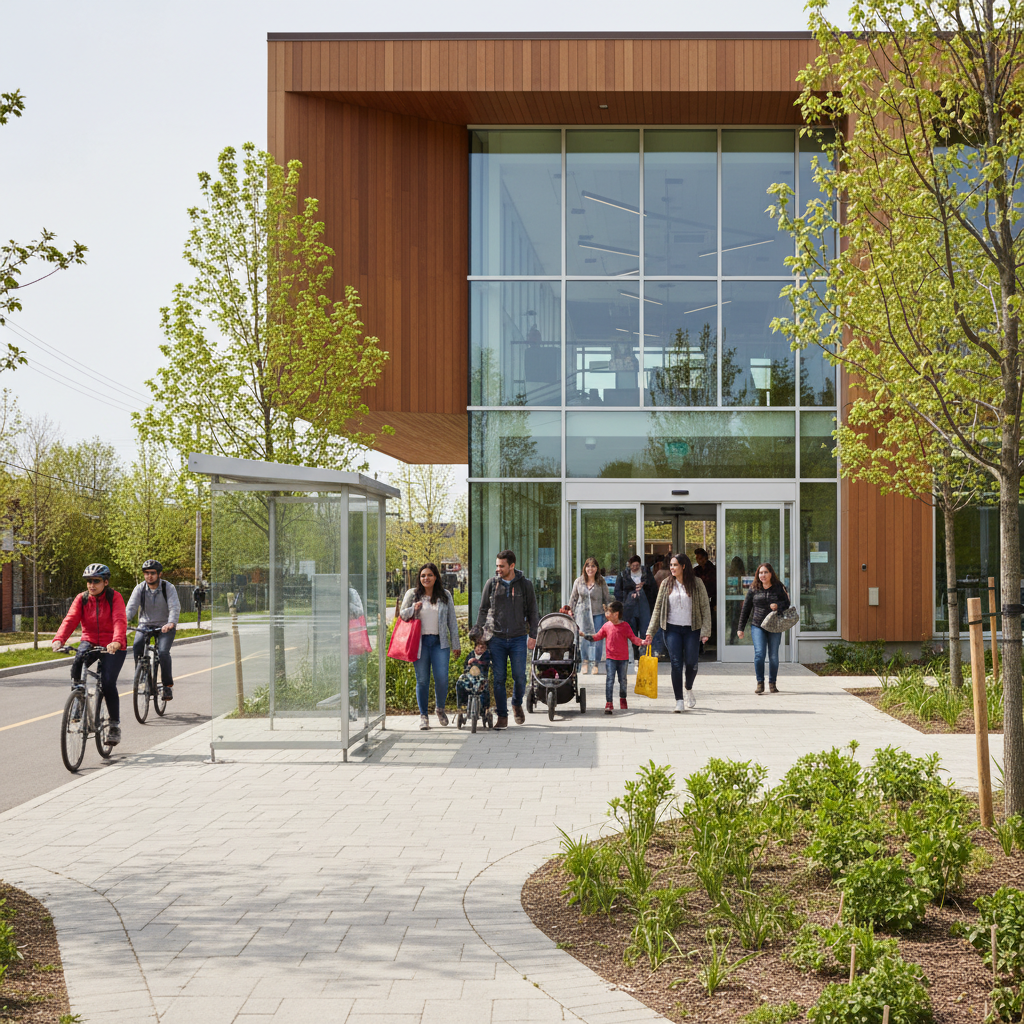
Kitchener Waterloo deserves attention because it shows what a durable Ontario growth corridor looks like. The region combines universities, technology employment, health care, manufacturing, transit investment, and a housing market that still offers relative value compared with the core GTA.
For buyers leaving the GTA, the appeal is not only price. It is the ability to build a full life. Schools, libraries, community centres, trails, local restaurants, and employment options all matter. For investors, those same features create tenant depth. A rental market tied to one employer or one school is fragile. A rental market supported by multiple sources of demand is stronger.
Waterloo Region also illustrates a broader Ontario lesson: future value follows useful infrastructure and real employment. Not hype. Not slogans. Useful infrastructure. Real employment.
The same framework applies to parts of Durham, Hamilton, Guelph, London, Ottawa, and select pockets of Niagara. The question is not simply where prices are cheapest. Cheap can stay cheap. The question is where household formation, transit, job creation, and community amenities are moving together.
That is where long term buyers should pay attention.
8. Street level lifestyle: the numbers only matter if people want the life

Real estate math can become sterile if it forgets why people move.
A family does not choose Burlington only because a spreadsheet says the monthly payment is possible. They choose it because the grocery store is close, the waterfront is alive in May, the daycare route works, the grandparents can visit, and a Saturday morning does not require fighting traffic for every small joy.
A buyer does not choose Ajax only because the price is lower than Richmond Hill. They choose it because the GO station makes work possible, the waterfront trail gives the weekend shape, and the house has enough space for the life they are building.
A renter does not choose Kitchener only because the rent is cheaper than Toronto. They choose it because there is work, community, restaurants, transit, and the sense that a young household can still move forward there.
This is the part investors sometimes miss. Rent is not paid by a spreadsheet. Rent is paid by people. The best rental properties are not always the cheapest ones. They are the ones that solve a real life problem: commute, school, space, safety, dignity, convenience, and a neighbourhood people are proud to live in.
For sellers, street level lifestyle is also the story you need to tell. Not just square footage. Not just finishes. The life around the property.
9. YorkNine recommendation: how to act without guessing

Here is the YorkNine framework for May 13 2026.
Buyers should act when three things line up: the monthly payment is comfortable after stress testing, the location solves a real life need, and the purchase price is supported by recent comparable sales rather than wishful list prices. Do not wait for perfect certainty. It rarely arrives before prices move.
Sellers should price to the market that exists now, not the market they remember. April data shows rising GTA sales and falling listings, but buyers are still disciplined. The winning seller is the one who prepares properly, prices honestly, and tells a clear story about both the home and the neighbourhood.
Investors should underwrite income before appreciation. If rent, expenses, vacancy, repairs, financing, and taxes do not make sense, appreciation cannot be the rescue plan. Focus on legal suite potential, durable rental demand, transit, employment, and product types people actually need.
Pre construction buyers should read every line before signing. HST relief may help, but delays, development charges, closing costs, assignment limits, and financing risk still matter. Buy the project you can close, not the project you hope to flip.
Dreamers should keep learning. The Ontario market is not closed. It is changing. And in a changing market, the advantage goes to people who replace fear with preparation.
At yorknine.ca, Avi Samaroo and Quan Ve help buyers, sellers, investors, and future movers read the market clearly and act with discipline. The opportunity in 2026 is real, but it belongs to people who do the work before they make the move.
Related articles
- GTA Market Update and Bank of Canada Interest Rate News for September 8 2026
- GTA Real Estate Market Update for September 7 2026
- Ontario Real Estate Market Update for September 6 2026
- YorkNine Journal Market Briefing September 5 2026
- YorkNine Journal Market Briefing for September 4 2026
- YorkNine Journal Market Update for September 3 2026