Hamilton in May: Why the City Between the Escarpment and the Lake Is Having Its Defining Moment
By YorkNine Journal ·
She moved from Etobicoke to Hamilton and never looked back. In May 2026, with century homes still accessible and a food and arts scene that rivals any city in Ontario, Hamilton is making its most persuasive argument yet.
She moved from Etobicoke to Hamilton in the fall of 2023. Everyone she told looked at her the way people look at someone who has said something slightly surprising. Hamilton? She smiled. She had done the math, walked the streets, stood on the escarpment at dusk and watched the city spread below her toward the lake. She had made her decision.
Two and a half years later, she has a century home on a quiet street in Durand, a ten-minute walk to Locke Street South, a garden that gets afternoon sun, and a mortgage she can actually breathe around. She does not miss Etobicoke.
Hamilton is having a moment that is not a moment. It is a reckoning with what a city can be when it stops being underestimated.
The City Between Two Worlds
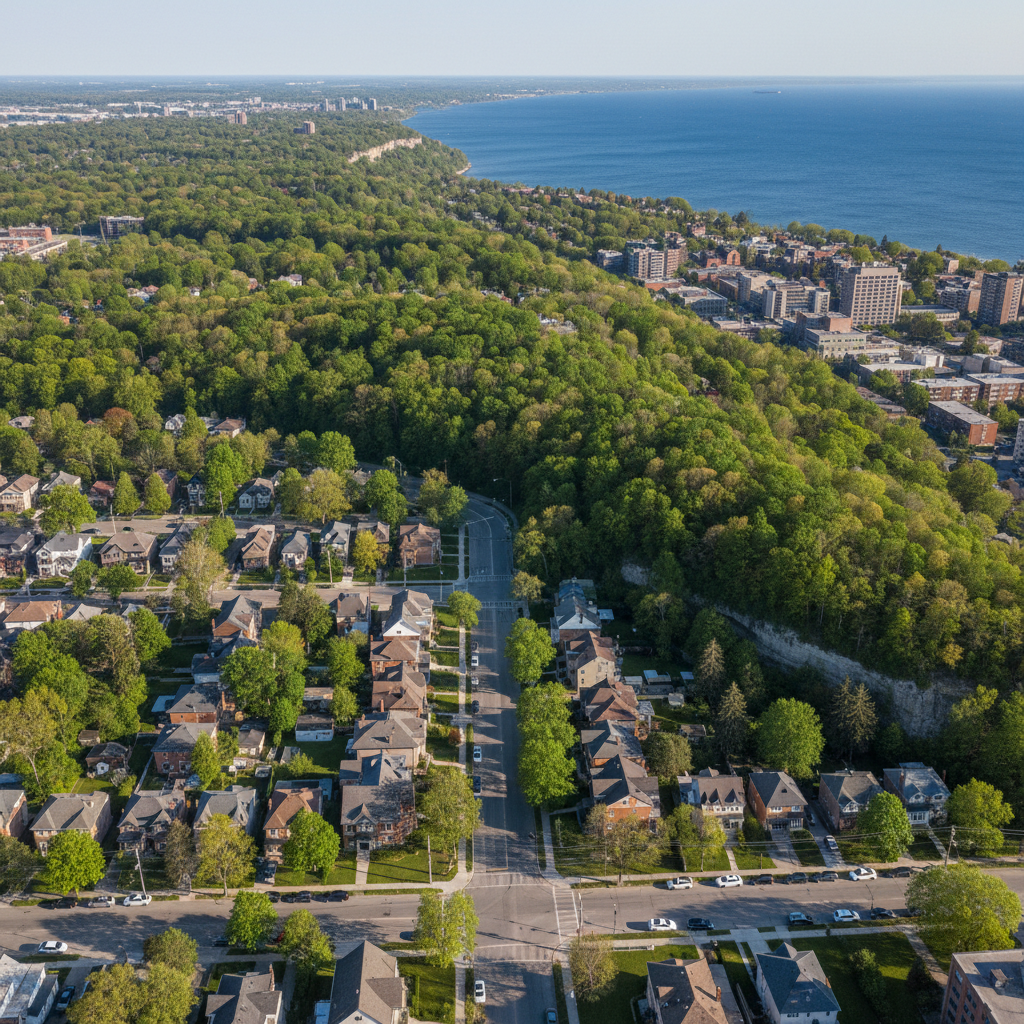
Hamilton sits at the western end of Lake Ontario, pressed between the water and the Niagara Escarpment. This geography is now its greatest asset. The escarpment is one of the most dramatic natural features in Ontario, a 100-metre limestone ridge running the entire length of the city's southern edge. At the top: waterfalls, forest trails, Bruce Trail access. At the bottom: a city of 600,000 that has been quietly rewriting its identity for the past fifteen years.
Hamilton has more waterfalls within its city limits than any other urban centre in the world. Albion Falls. Webster Falls in Dundas. Felker's Falls in Stoney Creek. Sherman Falls off Filman Road. In May, when the spring melt is still feeding the streams above the escarpment, these falls are running at their fullest.
Locke Street and James Street: The Neighbourhoods That Changed the Narrative
No neighbourhood did more to shift Hamilton's cultural reputation than the James Street North arts district and its counterpart on the west side, Locke Street South.
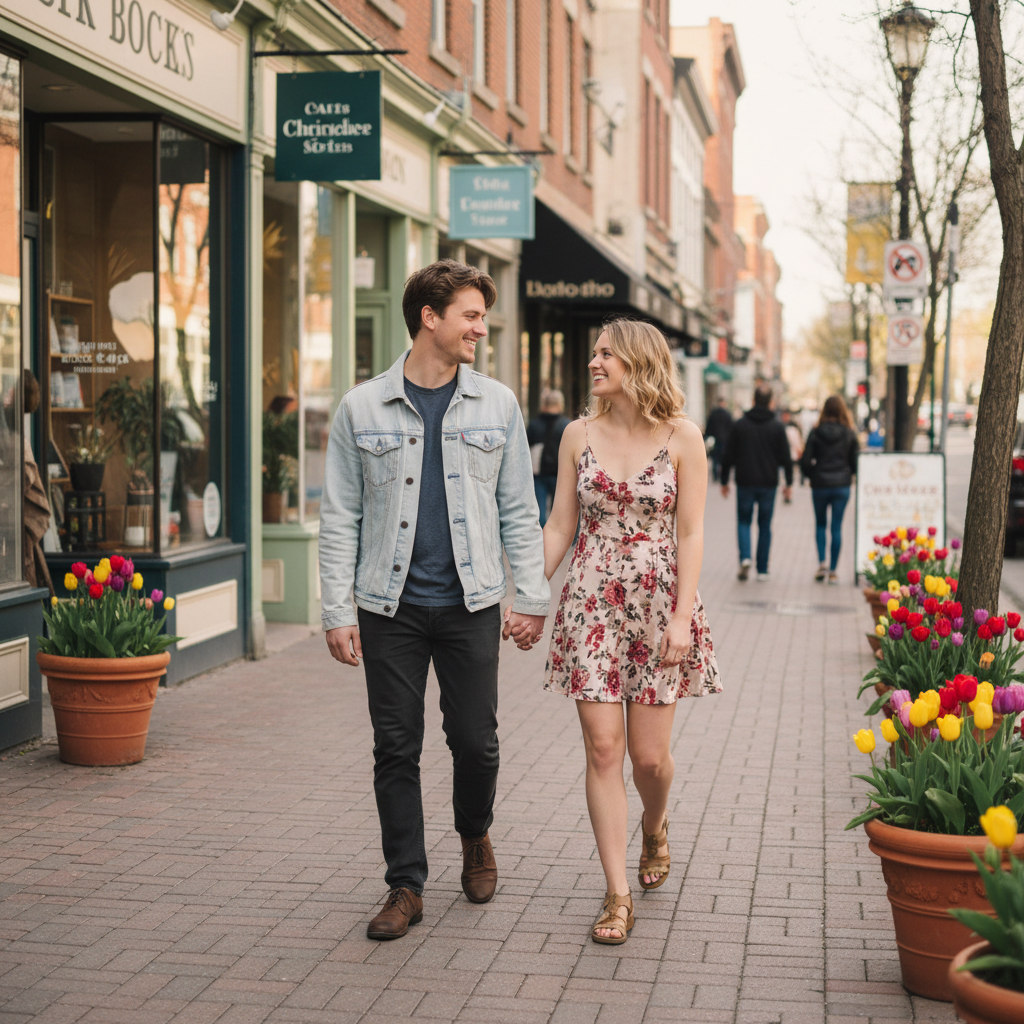
Locke Street runs through the Kirkendall neighbourhood between Aberdeen Avenue and Chatham Street. On a Saturday morning it is genuinely alive. Independent coffee roasters. A butcher that sources from local farms. A florist that does Dutch-inspired arrangements. A wine bar that fills by 5pm with people who walked there from houses they actually own. The street has the authenticity that Queen West in Toronto spent twenty years building.
James Street North is the art corridor. The monthly Art Crawl, running for over fifteen years, has turned this stretch into a regular gathering point for the city's creative class. In May, with gallery doors open and a warm evening, the street is one of the most pleasant urban experiences in Ontario.
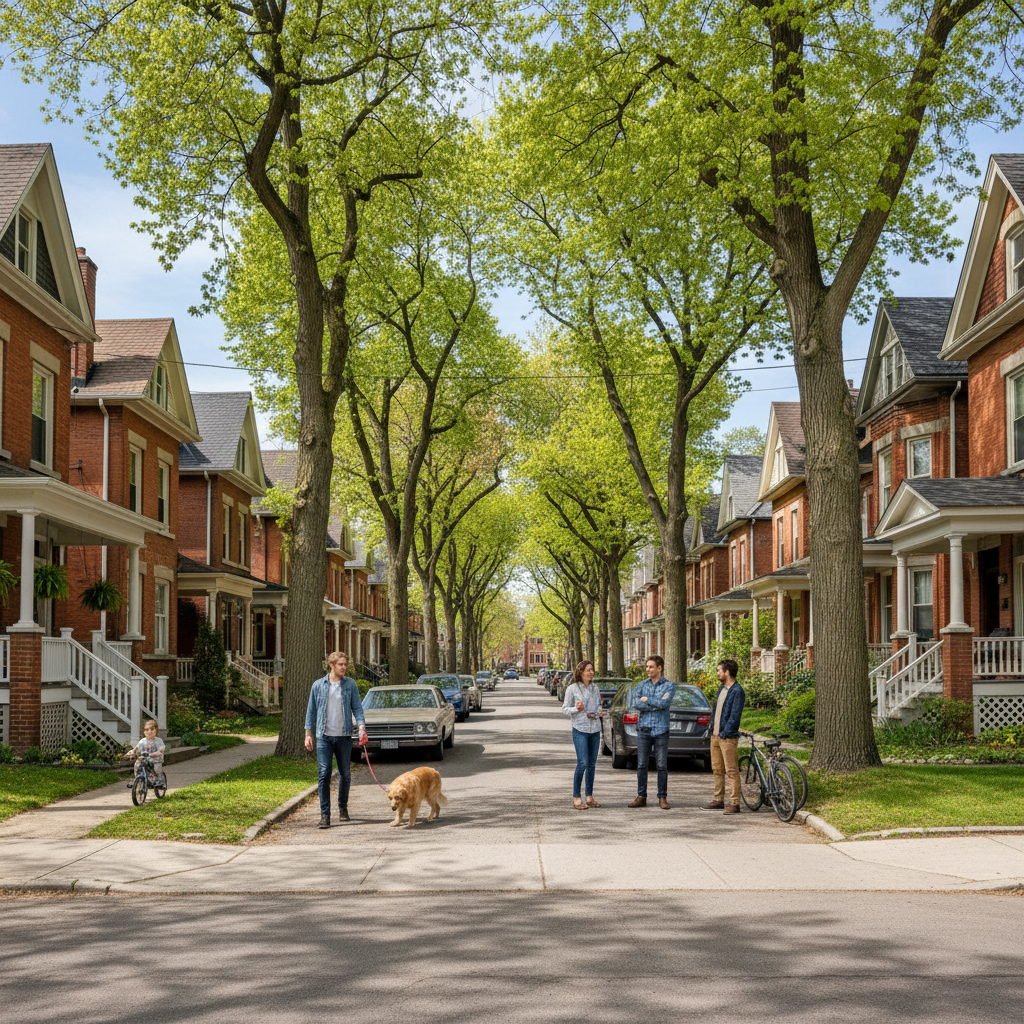
The residential streets that feed into both corridors, Durand, Kirkendall, Strathcona, Corktown, are full of century homes on generous lots. Many were purchased by the first wave of Hamilton converts in the 2014 to 2018 period at prices that now seem nearly fictional.
The Real Estate Argument for Hamilton in May 2026
RE/MAX data for 2026 confirms what agents on the ground have been saying: Hamilton is transitioning to a balanced market, with supply being absorbed and price stability returning.
Average residential price in the Hamilton-Burlington region: approximately $783,000. Single-detached homes are projected to see the strongest demand in 2026. The three most desirable neighbourhoods flagged by RE/MAX: Rural Glanbrook for semi-rural lifestyle; Central Burlington for lakefront community living; Waterdown West for young families seeking modern builds with green space.
For buyers, the entry point that still exists in Hamilton proper, detached century homes in Durand and Kirkendall between $650,000 and $850,000, is a value proposition that will not survive another rate cut cycle.
First-time buyers in Hamilton are currently purchasing between $780,000 and $920,000. Move-up buyers between $1,300,000 and $1,600,000. The spread tells you something important: the Hamilton market has matured. It is not a discount city anymore.
What Hamilton Offers That the GTA Cannot
The commute question is real. Hamilton to Union Station via GO is approximately 65 to 75 minutes on the Lakeshore West line. Burlington GO cuts that to 55 minutes. It is longer than Mississauga or Oakville.
But for the hybrid or remote worker, the math changes entirely. A two-day-a-week commuter accesses a home that is 20 percent less expensive than Burlington and 40 percent less than Oakville. The lifestyle dividend in the remaining five days, the waterfalls, the food scene, the human-scaled neighbourhoods, is not factored into any affordability calculator. It should be.
Visit yorknine.ca to explore Hamilton and Burlington listings and connect with a YorkNine agent who knows the Golden Horseshoe intimately.
Related articles
- What’s Happening Across the GTA This Season: Six Lifestyle Signals for Summer 2026
- The GTA This Season: Six Neighbourhood Lifestyle Stories to Watch in Summer 2026
- May in Halton and Peel: The Case for Oakville, Burlington, Mississauga, and Brampton When the Spring Is This Good
- May in Halton: Why Oakville and Burlington Are Worth Every Dollar This Spring
- Why the GTA's Heritage Homes Hold Their Value Through Every Market Cycle
- How GTA Condo Dwellers Are Turning Less Space Into More Life in Spring 2026