CREA Cuts the Forecast, the GTA Holds Steady: What May 2 2026 Really Means for Buyers and Sellers
By YorkNine Journal ·
CREA slashed its 2026 sales forecast from 5.1 percent growth to 1 percent. The GTA is stabilizing, not collapsing. Here is the full picture for buyers, sellers, and investors on May 2 2026.
Saturday morning in the GTA. The open house signs are out. The spring market is moving. And the data tells a story that every buyer and seller in the region needs to read before they make their next move.
CREA released its updated 2026 forecast this April. The headline: national home sales are now expected to rise just 1 percent this year, down from the 5.1 percent growth projected in January. The average national price is forecast at approximately $689,000, roughly $10,000 below the previous estimate. In Ontario and the GTA specifically, price growth is expected to be near zero.
The reason is not mysterious. The oil shock that followed the Iran conflict pushed bond yields higher in mid-March. Fixed mortgage rates jumped just as the spring market was supposed to ignite. CREA senior economist Shaun Cathcart said the combination of geopolitical turbulence and rate volatility has piled onto already fragile buyer sentiment. The market that was supposed to accelerate in Q1 2026 did not.
What the Numbers Actually Say About the GTA Right Now
March 2026 TRREB data: 5,039 sales, up 1.7 percent year over year. Average price $1,017,796, down 6.7 percent from March 2025. New listings declined 16.7 percent, tightening supply even as demand stayed cautious.
The national MLS Home Price Index fell 4.7 percent year over year in March. The national sales-to-new-listings ratio held at 47.8 percent, technically balanced but skewed by a listings drought rather than genuine buyer strength.
What this tells experienced market participants: the GTA is in a correction that is stabilizing, not accelerating. Prices have found a floor in most detached segments in York Region, Halton, and Durham. The condo market in Toronto 416 remains oversupplied and continues to drift lower, but at a slower pace than Q3 and Q4 2025.
The Bank of Canada held at 2.25 percent on April 29. GDP growth is now projected below 2 percent for both 2026 and 2027. The rate cut that many buyers were counting on for spring is not coming in June unless the economic data deteriorates sharply. Variable rate holders are in a holding pattern. Fixed rate buyers are locking in at 4.04 to 4.19 percent depending on term and lender.
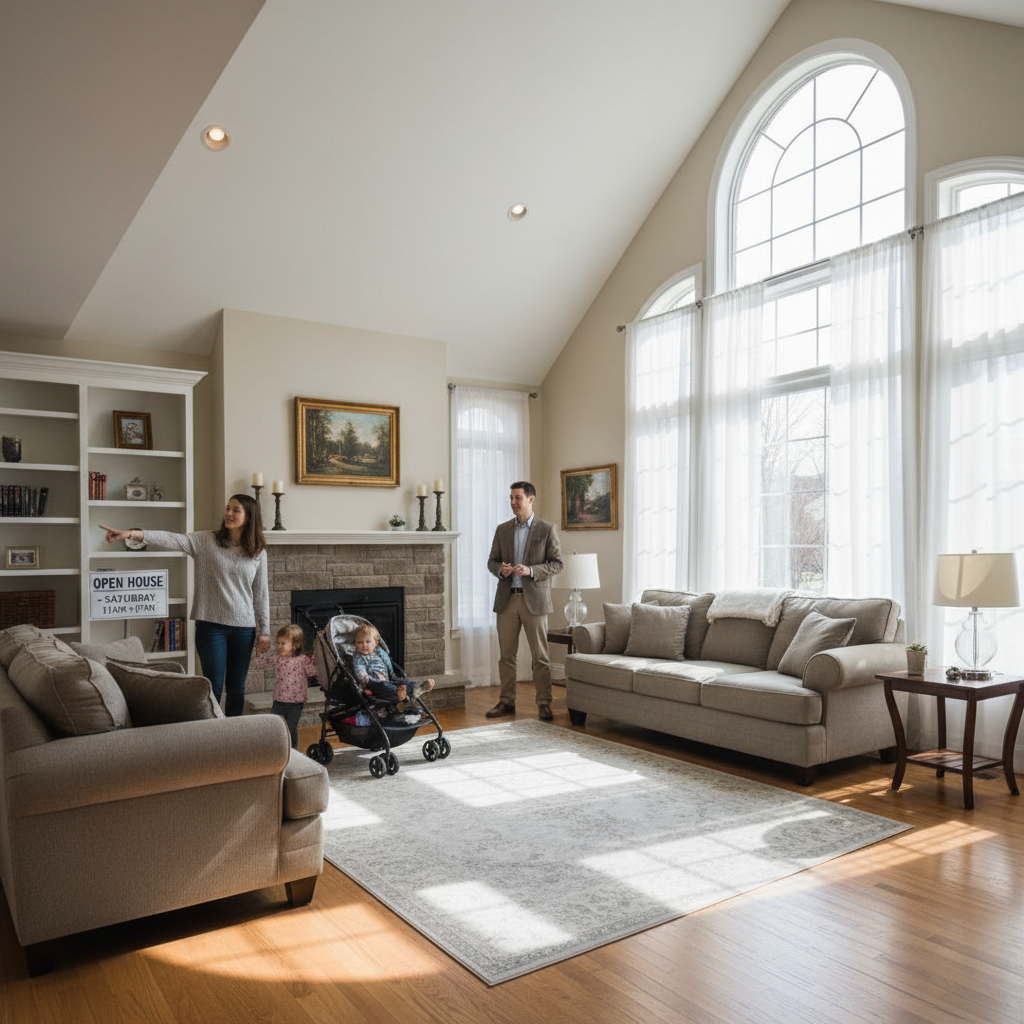
Where the GTA Market Is Actually Moving This Weekend
The story in May 2026 is not uniform. It is hyperlocal. While the headline numbers suggest caution, specific segments and specific cities are seeing genuine activity.
York Region detached under $1.3 million: multiple offers returning in Markham and Stouffville on turnkey product. Days on market down to 18 in some pockets.
Durham Region: Ajax, Whitby, Oshawa continuing to outperform. GO Transit expansion driving demand from Toronto buyers priced out of the 416 and inner 905. Detached in Ajax under $950,000 moving within 14 days on average.
Halton: Oakville and Burlington supply critically low. Motivated sellers in Milton and Halton Hills creating entry-level opportunity under $1 million for detached.
Hamilton: Transitioning to a balanced market per RE/MAX data. Average residential price approximately $783,000. Rural Glanbrook, Central Burlington, and Waterdown West identified as the three most desirable neighbourhoods for 2026.
Toronto 416 condos: $660,600 average. Buyers circling at historic discounts but hesitating on rate uncertainty. The buyers who commit in May are positioned for meaningful upside when rate cuts materialize.

The Variable vs Fixed Question in May 2026
This is the most common question in every GTA agent's inbox right now. Here is the honest answer.
Fixed at 4.04 to 4.19 percent gives you certainty. In a world where the Bank of Canada has signalled that its next move could be up, down, or sideways depending on oil prices and trade negotiations, that certainty has real value. If you are buying a primary residence and your household budget is fully stretched at current prices, lock in.
Variable at approximately 3.35 percent gives you exposure to cuts if the economic outlook deteriorates. The Bank of Canada has already cut 7 times in the current cycle. If trade uncertainty deepens or GDP growth disappoints further, more cuts are likely. Variable wins in that scenario.
The nuanced answer: if you have financial cushion and a longer hold horizon, variable makes sense. If you are at the edge of your qualification, lock in fixed and do not gamble your housing stability on a rate forecast.

What May 2 Means for Every GTA Participant
For buyers: the window is open. The CREA downgrade is a headline, not a catastrophe. Prices have corrected. Supply is tighter than it looks. The buyers sitting on the sidelines waiting for a further 10 percent drop are likely to be disappointed.
For sellers: spring pricing requires honesty. The days of listing 10 percent over market and waiting are over in every segment. Price to the market, stage properly, and move.
For investors: the Durham Region income property thesis is intact. Legal basement suites in Ajax, Whitby, and Oshawa on detached properties are generating $1,800 to $2,200 per month in rent on basements alone. The numbers work at current prices and rates.
Visit yorknine.ca for a current neighbourhood assessment and to connect with a YorkNine agent this weekend.
Related articles
- GTA Market Update and Bank of Canada Interest Rate News for September 8 2026
- GTA Real Estate Market Update for September 7 2026
- Ontario Real Estate Market Update for September 6 2026
- YorkNine Journal Market Briefing September 5 2026
- YorkNine Journal Market Briefing for September 4 2026
- YorkNine Journal Market Update for September 3 2026